A new logic board for the iPod 5th gen
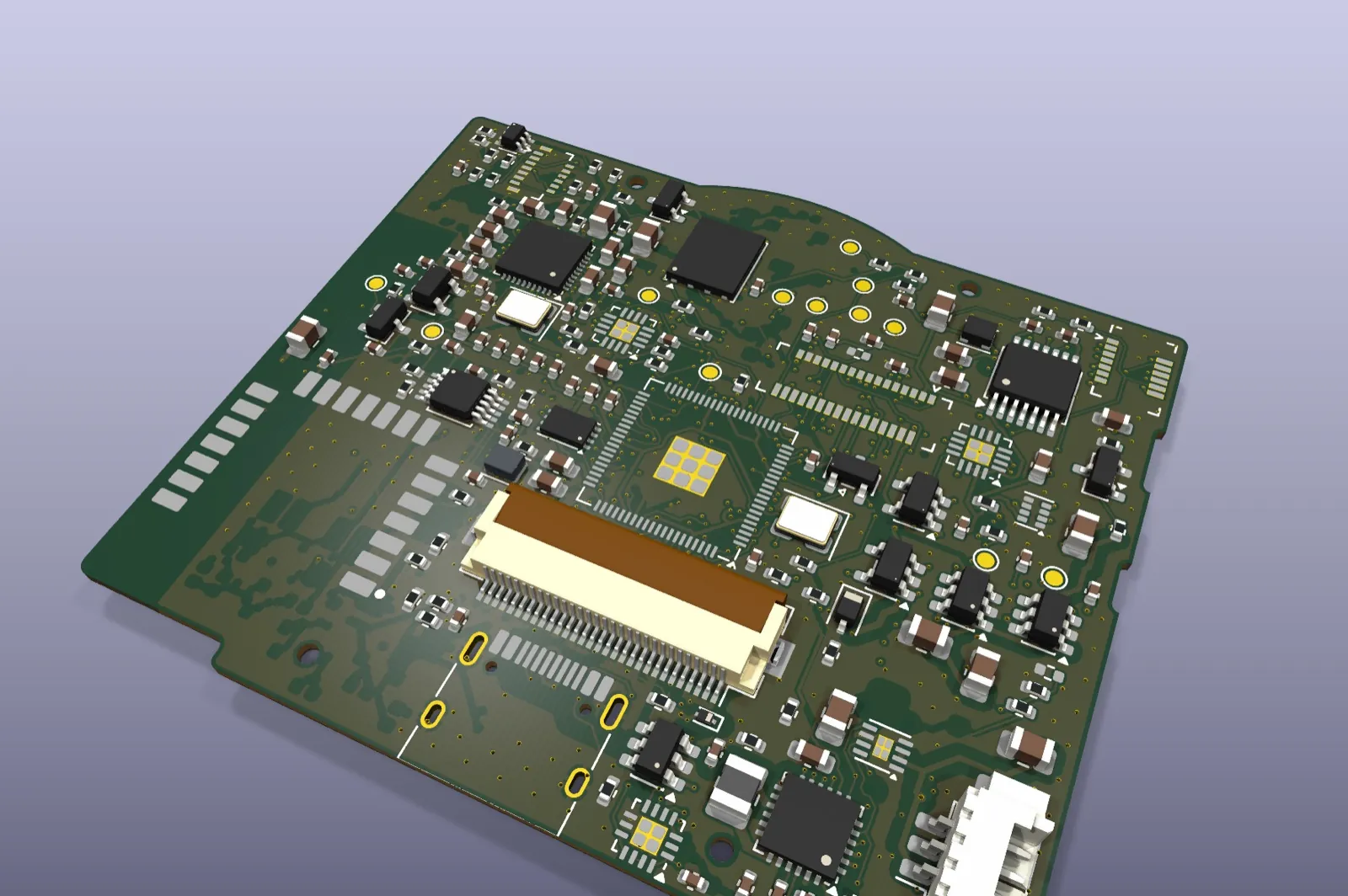
After the hand-built version worked, I started designing a board that drops into a real iPod 5th gen instead of the original logic board. It has the same outline, and the original LCD, click wheel, headphone jack, hold switch and battery connectors sit in their original places. USB-C goes where the 30-pin dock was, and microSD replaces the hard drive.
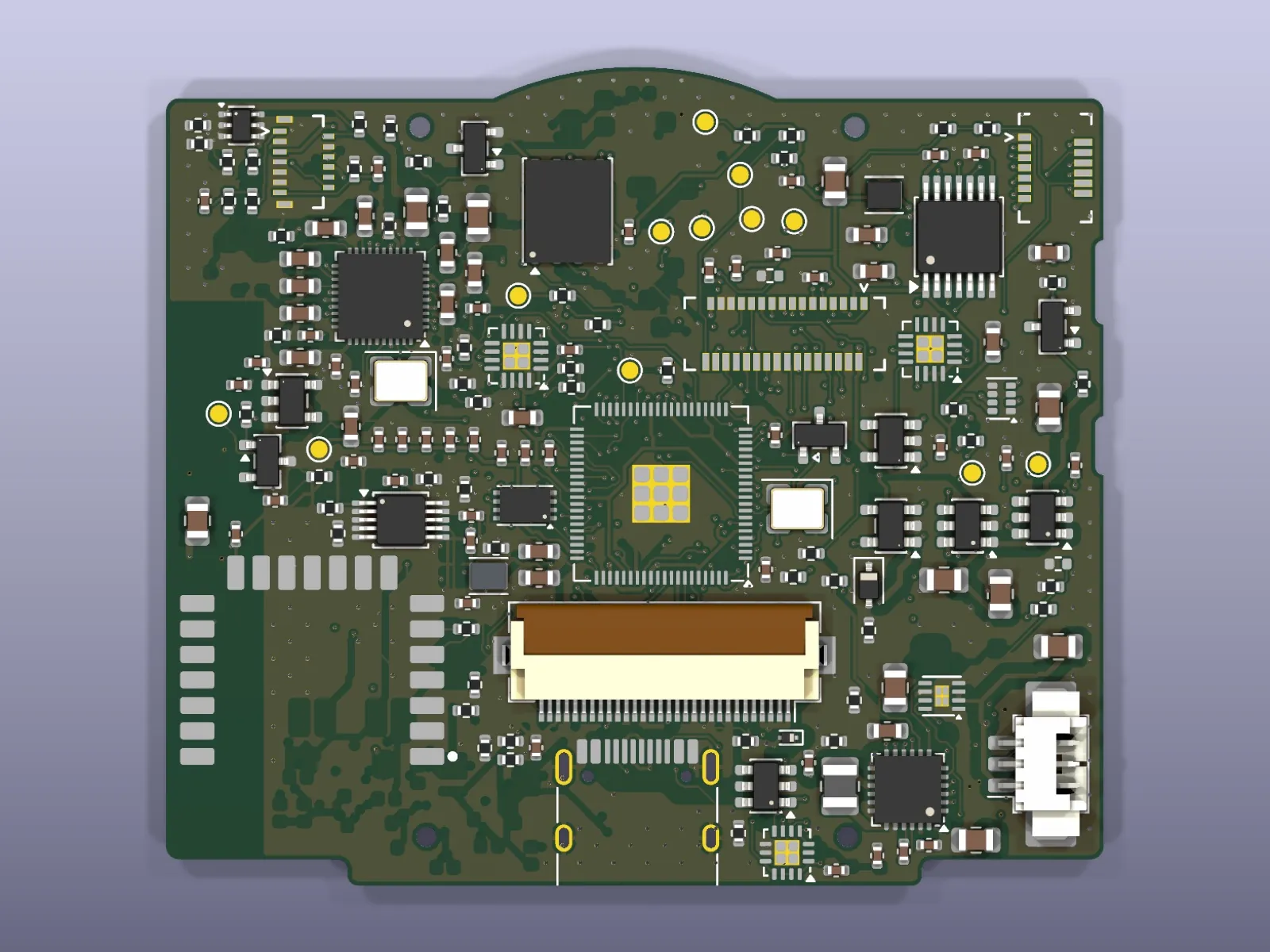
Main board, component side
On the board
- Brain: RP2350B with 16 MB flash and 8 MB PSRAM
- Wireless: RM2 module (same Wi-Fi/Bluetooth chip as the Pico 2 W)
- Audio: Cirrus CS43131 DAC with headphone amp, plus digital audio over USB-C
- Power: BQ25895 charger with boost (so USB-C headphones get 5 V), USB-C controller, fuel gauge, a hard-off switch
- Feel: a small vibration motor driven by a haptics chip for the click, with the original piezo kept as an option
- Inputs: the original click wheel, read by the RP2350's PIO, and the original buttons
- Spotify: an optional Raspberry Pi CM0 on a second board, powered only in Spotify mode
State
Both boards pass DRC with zero errors and nothing unconnected. All 80 original pads are in place. The boards are not ordered yet. I write the firmware myself, so this part of the project is hardware only.
Designed in KiCad 10.
Work log · 7 steps
-
Fixes from a full review
An independent review of the whole design, and the fixes it asked for.
Learned: Regenerate the fab files after every fix. Gerbers made before a fix are already out of date.
-
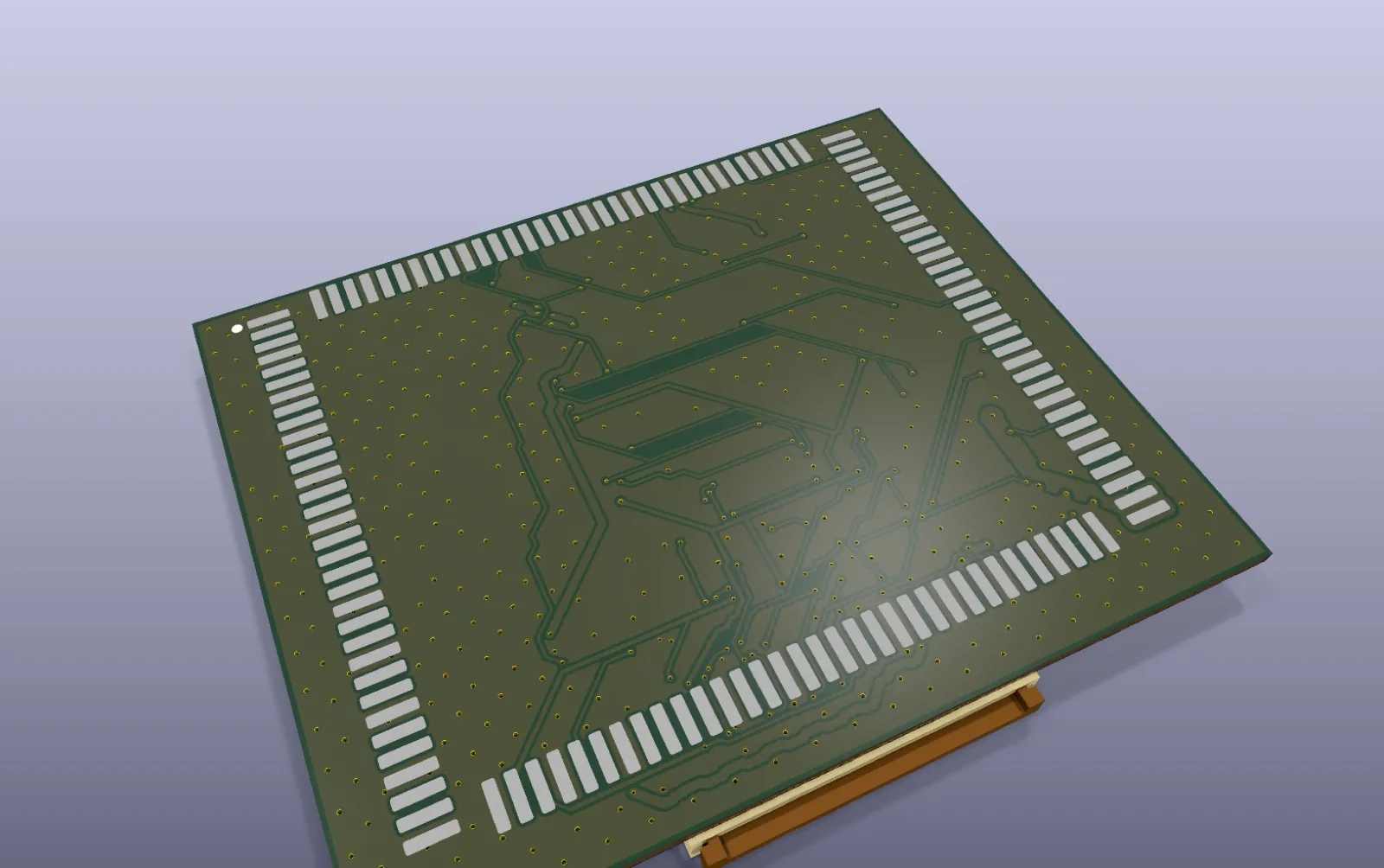
Spotify carrier board
A second 4-layer board in the old hard-drive bay with microSD and an optional Raspberry Pi CM0, plus thermal and power notes for it.
-
Simulated before ordering
Power, audio and signal checks in ngspice and my own solvers.
Learned: Everything passed or was fixed. The power-plane and antenna checks still need tools I don't have.
-
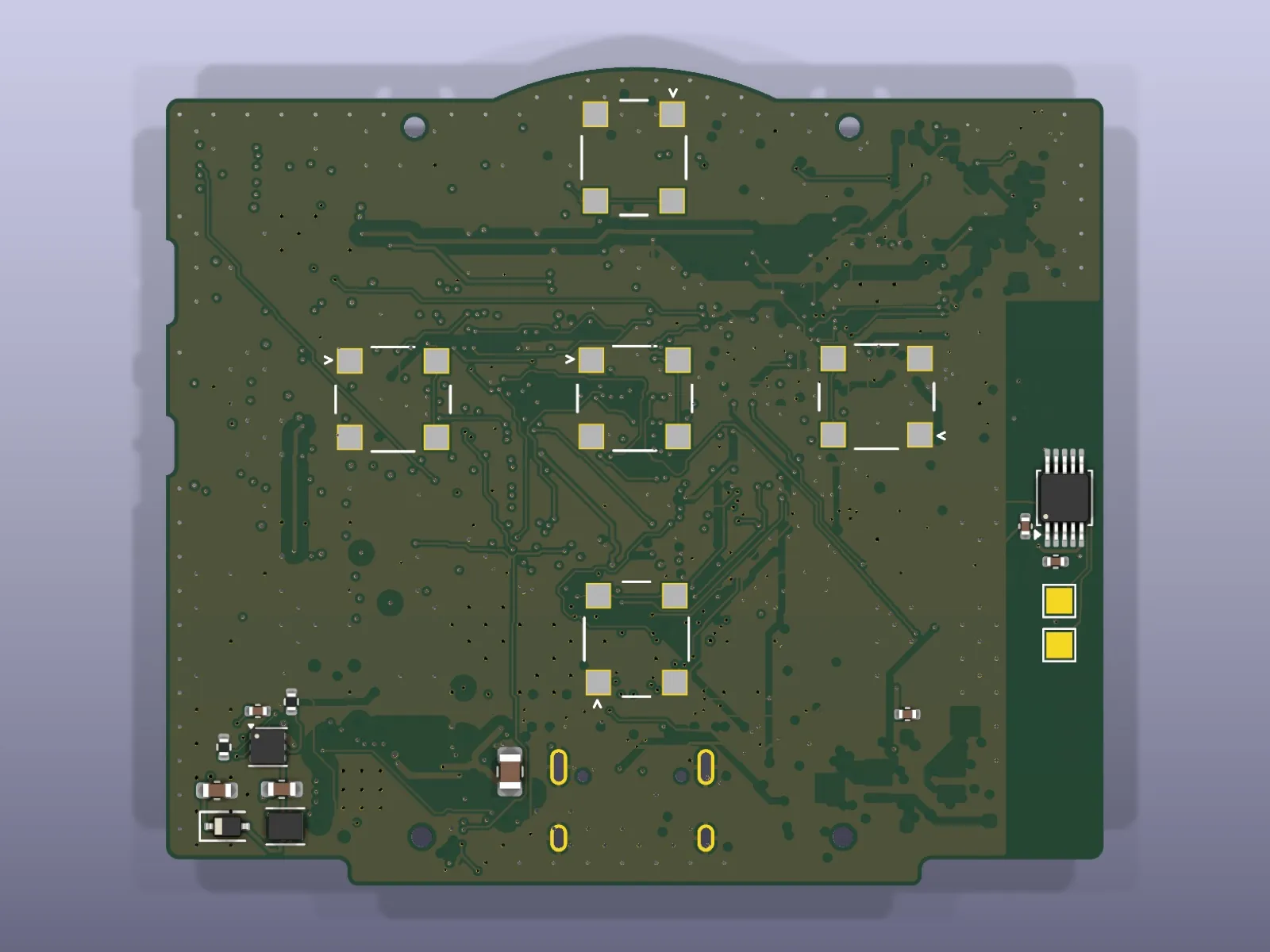
6 layers, 0.8 mm, 193 parts
Placed and routed with Freerouting plus a custom finishing router. A 4-layer attempt is archived.
Learned: The board would not route on four layers at this density. Six layers, with via-in-pad, made it fit.
-
Schematics from code
Symbols generated from datasheet pin tables, schematics generated by Python scripts, ERC clean.
Learned: When the schematic is code, a pin change is one edit and a re-run, not an afternoon of clicking.
-
Parts and power
Picked the chips based on my hand-built version, laid out the power tree and checked every connector against the original board.
Learned: The 1500 mAh cell from my first build already ran everything, so it stayed.
-
Which iPod to build for
Researched replacement boards for the 4th generation, then switched to the 5th (Video), because my back plate is a 5th-gen part.
Learned: Start from the parts you actually own.